INDEPENDENT CONCEPT PROPOSAL
Amaze Tour.
A working plan
for an immersive idea.
- Author
- Patrick Quirk
- Focus
- Music-led VR touring concept
Design the experience. Plan the whole day.
Patrick’s independent 2020 proposal connected a VR show with audience research, a national route, guest engagement and the operating plan behind it. Using Photoshop and Cinema 4D, he visualized how the experience could work from arrival to showtime.
Developed for an AmazeVR touring brief, this is a concept proposal rather than an executed tour or a QBR-delivered program. No client or artist endorsement is implied.
PATRICK’S ORIGINAL 3D CONCEPT STUDIES
A mobile tour, visualized.
Three views from the proposed environment. Choose a thumbnail to explore each view within the gallery.
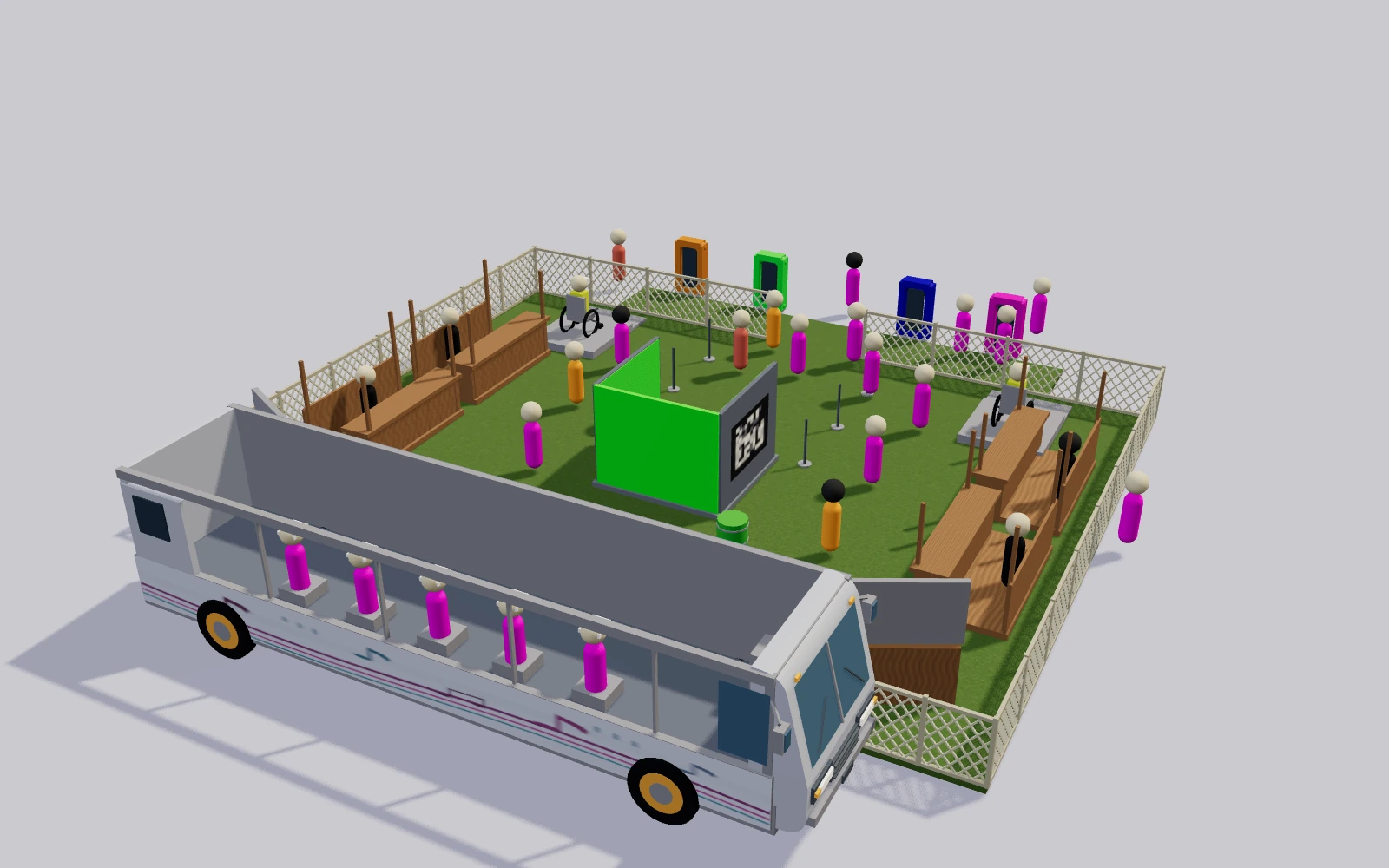
The reverse angle shows the proposed tour bus and its relationship to the surrounding activation spaces.


Concept renders supplied by Patrick Quirk. These are reconstructed views of proposed environments, not photographs of an executed tour. No artist or company endorsement is asserted.
01 / AUDIENCE + ROUTE
Give the idea a touring strategy.
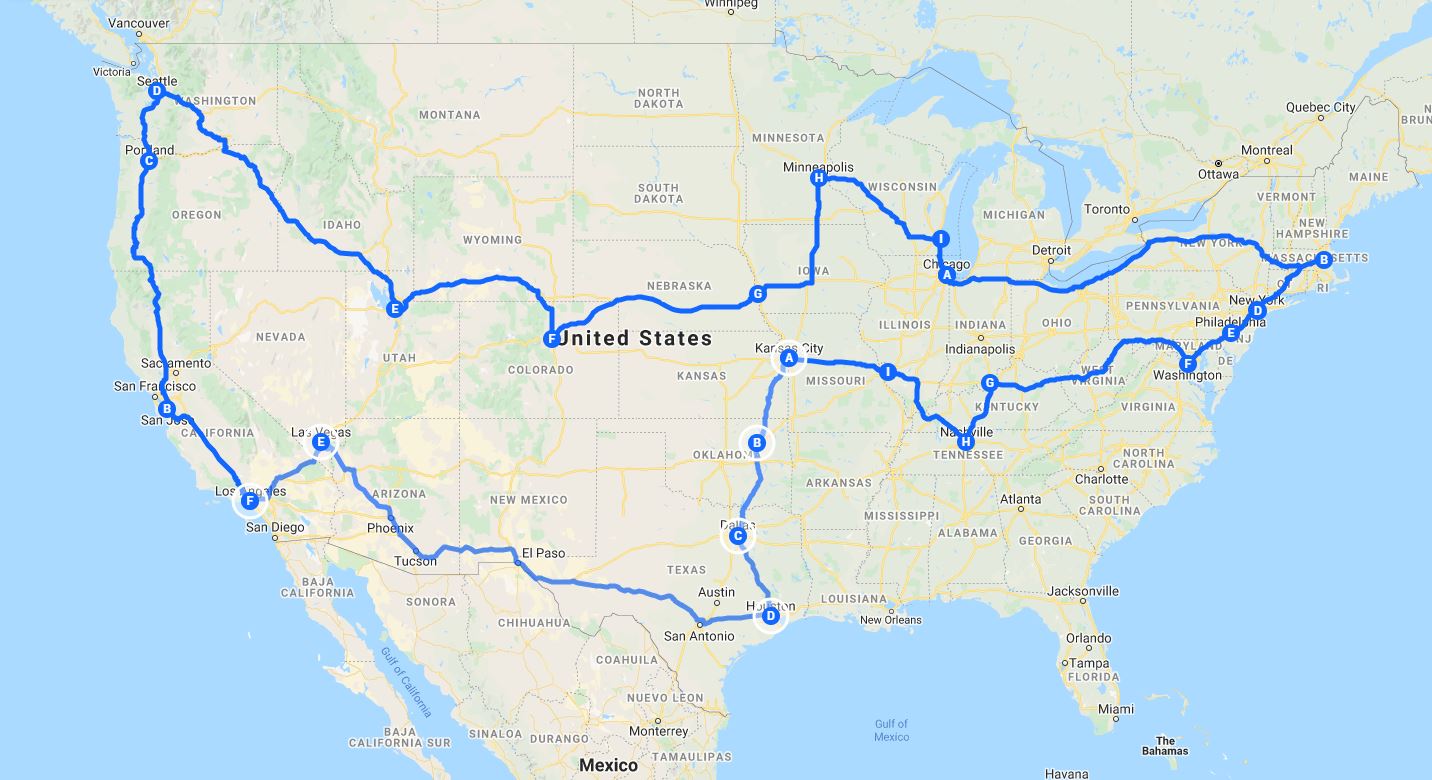 View map larger
- Planned tour stops
- 23
- Proposed activation days
- 71
The route drew on historical music-audience signals and previous concert stops to identify potential markets. Patrick mapped those signals into a proposed calendar, with weekend activations and time allocated between stops for travel, setup and crew recovery.
These were planning inputs from the original proposal, not current audience research or confirmed bookings. New York City and Brooklyn appear as separate stops in the deck’s list.
02 / EXPERIENCE DESIGN
Make the waiting part of the experience.
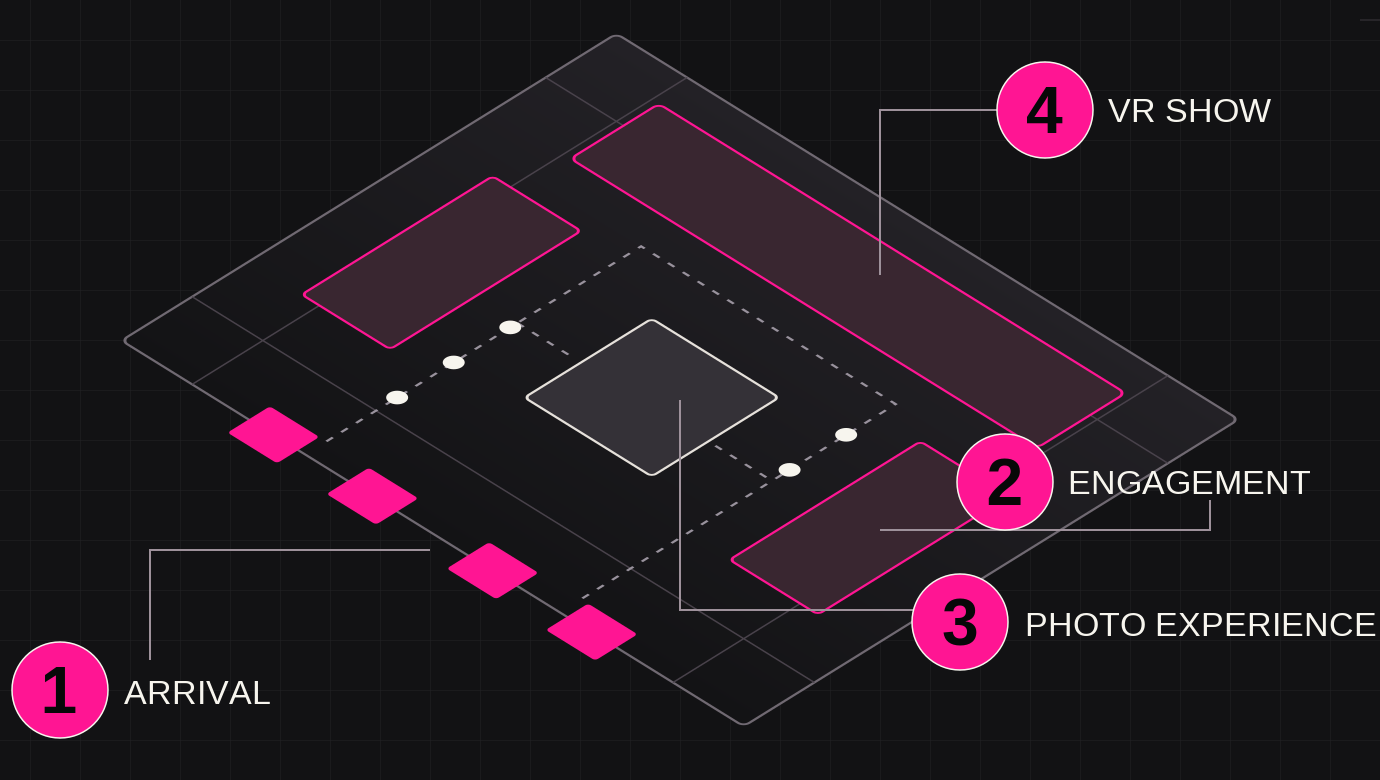
Numbered zones correspond to the four proposed guest-journey points. Concept schematic; not to scale.
The environment extended beyond the headset. Arrival, entertainment and shareable moments were designed to give guests ways to engage before the main show.
Arrive and discover.
A memorabilia-style photo opportunity would buffer the entry queue, introduce the experience and give passersby a reason to stop.
Engage before the show.
Pre-show spaces proposed local talent, an MC or DJ, trivia and giveaways, alongside VR content. A shared accessibility point was included as a design intention, subject to detailed accessibility review.
Make something to take away.
A central 3D photo experience proposed a digital share and a physical lenticular keepsake. An interactive flip-disc wall offered another queue engagement option.
Enter the VR experience.
A second ticket scan would validate admission to the show. The run of show paired timed sessions with cleaning intervals and defined crew responsibilities.
03 / PEOPLE + OPERATIONS
Ensure a successful run of show.
Pre-show
- Offload + setup
- Team lead arrivesSite manager + team lead walkthrough
- Brand specialists on-siteTeam lead + brand ambassador huddle and walkthrough
- Full-team huddleRun-of-show daily notes
- Show readyTour manager walkthrough
- Gates open
Showtime
- First show
- Clean
- Second show
- Clean
- Team lead starts breaks
- Last show of the night
- Clean + close
A repeatable show day.
The Friday plan moved from offload and setup through team walkthroughs, a full-team huddle and show readiness. Timed sessions, cleaning, breaks and closeout were assigned to specific roles.
A crew that can sustain the tour.
The proposal built in days off, rotation between positions, team time and basic on-site needs. Overlapping skills and relief coverage were intended to help the team handle changes.
Weather and technical resilience.
Options included an abbreviated footprint, cover or alternate indoor locations, spare technology, emergency power and a backup VR experience.
Transport and staffing contingencies.
Driver redundancy, preventive maintenance, a chase vehicle or rental replacement and standby staff were proposed responses to predictable disruptions.
04 / EVALUATION
Decide what success would mean.
Recommendation
Subscription conversion*
Revenue + social reach
Margin + ROI
Showtime consistency
Team feedback
No scores or outcomes reported. *If confirmed as a program priority.
Would guests recommend the experience?
Net Promoter Score would assess guests’ willingness to recommend the experience, giving the tour a guest-response measure alongside its commercial and delivery measures.
Would the tour create commercial value?
The proposal paired subscription conversion, if confirmed as a priority, with revenue growth over time and social reach. Operating margin and ROI would help assess whether the program remained financially valuable.
Could the team deliver consistently?
Project schedule variance would compare planned timing with showtime delivery. Peer and self-assessment through 360-degree team feedback would add a view of how the touring team worked together.
Connect the creative promise to the operating plan.
The strength of this study is the connection between the visible experience and the work needed to support it. Audience, environment, crew, schedule and contingency were considered together. It shows the planning perspective Patrick brings to QBR: make the idea compelling, then ask what it will take to deliver it.
Independent concept work by Patrick Quirk, developed in 2020 before QBR Experiential. This case study describes a proposal and makes no claim of tour execution, client engagement or artist endorsement.